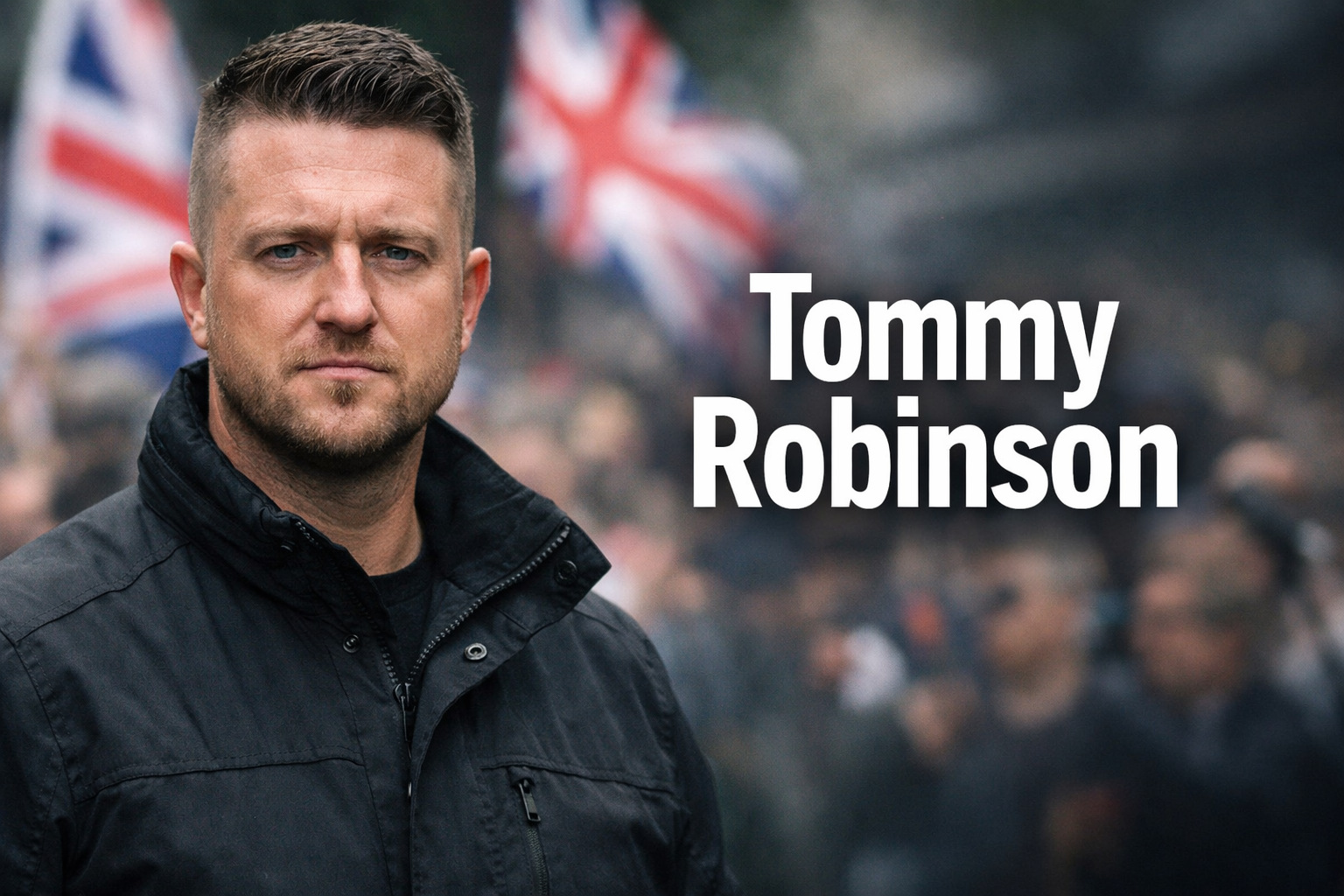





Tommy Robinson is one of the most controversial political activists in modern Britain.
Over the past two decades, he has moved from local street activism to international attention, legal battles, and media debate.
Supporters describe him as a free-speech campaigner who challenges extremism.
However, critics argue that his rhetoric fuels division and promotes far-right ideology.
Because of this sharp divide, his name frequently appears in news, politics, and online discussions.
Therefore, understanding who he is requires examining his background, activism, controversies, and influence in a factual and balanced way.
This guide explains Tommy Robinson’s life, rise to prominence, legal issues, political stance, and long-term impact in the UK and beyond.
Who Is Tommy Robinson?
Tommy Robinson is a British activist and political figure known for anti-immigration and anti-Islam campaigning.
He first gained public attention in the late 2000s through street protests and nationalist activism.
Importantly, “Tommy Robinson” is not his birth name.
He was born Stephen Christopher Yaxley-Lennon in 1982 in Luton, England.
Although he presents himself as an independent activist, his public identity has long been associated with far-right movements and nationalist politics in Britain.
Early Life and Background
Tommy Robinson grew up in Luton, a town with significant ethnic and religious diversity.
During his youth, local tensions and community divisions influenced his worldview.
Initially, he worked in construction and football-related activities.
Meanwhile, his involvement in street culture and local activism gradually increased.
Eventually, a turning point occurred in 2009.
At that time, protests involving Islamist groups in Luton created national attention.
As a result, Robinson began organizing counter-protests.
This moment led directly to the creation of a movement that defined his early career.
Founding of the English Defence League (EDL)
In 2009, Tommy Robinson became co-founder of the English Defence League (EDL).
The group described itself as opposing Islamist extremism.
However, critics labeled it an anti-Muslim and far-right organization.
EDL demonstrations quickly spread across UK cities.
Consequently, Robinson became a national figure within activist and political circles.
EDL protests were often confrontational.
For example, clashes with counter-protesters and police occurred in multiple cities.
Therefore, media coverage portrayed the movement as polarizing and volatile.
Although the group claimed patriotic motives, accusations of racism and extremism followed consistently.
Departure from the EDL
In 2013, Robinson announced he was leaving the EDL.
He stated that the organization had become too extremist and difficult to control.
Additionally, he claimed he wanted to pursue activism through political and media channels instead of street movements.
However, critics argued the departure was strategic rather than ideological.
They suggested he remained connected to similar views despite leaving the group.
Regardless of interpretation, his public role shifted significantly after this point.
Instead of leading protests, he began focusing on online media and commentary.
Legal Issues and Arrests
One of the most defining aspects of Tommy Robinson’s public life has been repeated legal trouble.
Over the years, he has faced multiple arrests and convictions.
Early Convictions
Before becoming nationally known, Robinson had criminal convictions related to violence and public order.
These cases contributed to his controversial reputation from the beginning.
Contempt of Court Case
A major legal turning point occurred in 2018.
At that time, Robinson filmed outside a UK court during an ongoing trial involving grooming-gang defendants.
Because UK law restricts reporting during active trials, his actions risked prejudicing proceedings.
Consequently, he was arrested and jailed for contempt of court.
This incident generated massive media attention.
Supporters claimed the arrest suppressed journalism and free speech.
Conversely, legal experts argued the conviction protected fair-trial rights.
The case became one of the most debated legal episodes in modern UK activism.
Free Speech Debate
Tommy Robinson’s supporters frequently frame his activism as a free-speech struggle.
They argue he exposes issues ignored by mainstream media.
However, opponents strongly disagree.
They claim his messaging spreads misinformation and stigmatizes communities.
This debate reflects a broader conflict in Western democracies:
Where should the boundary between free expression and harmful speech lie?
Because Robinson’s activism sits directly on this boundary, reactions to him remain polarized.
Political Views and Ideology
Tommy Robinson’s views center on several consistent themes.
Immigration
He strongly opposes mass immigration into the UK.
Specifically, he argues that immigration strains social cohesion and national identity.
Islam and Extremism
Robinson claims his activism targets Islamist extremism rather than Islam itself.
Nevertheless, critics say his rhetoric generalizes Muslims and fuels hostility.
National Identity
He promotes a nationalist vision of British culture and heritage.
Therefore, he appeals to audiences concerned about cultural change and globalization.
Anti-Establishment Messaging
Robinson frequently criticizes mainstream media and political elites.
As a result, his message resonates with populist and anti-establishment audiences.
Media Presence and Online Influence
After leaving street activism, Robinson shifted heavily into digital media.
He began producing:
- videos
- commentary
- interviews
- documentaries
- social-media content
Consequently, his reach expanded beyond the UK.
Supporters from Europe, the United States, and Australia began following his content.
Platforms played a major role in his visibility.
However, many also removed or restricted his accounts due to policy violations.
Despite bans, he maintained an online presence through alternative platforms and websites.
Therefore, his influence continued even after mainstream removal.
International Connections and Support
Over time, Robinson’s activism gained international attention.
He appeared at events and received backing from some foreign commentators and political figures.
This cross-border support reflected a broader global trend:
the rise of nationalist and anti-immigration movements in multiple Western countries.
However, critics argued that international alliances strengthened extremist networks.
Thus, Robinson’s global visibility intensified controversy around him.
Public Perception: Support vs Criticism
Public opinion about Tommy Robinson is deeply divided.
Supporters View Him As:
- a free-speech activist
- a whistleblower on crime and extremism
- a critic of political correctness
- a nationalist defender of British culture
Critics View Him As:
- a far-right agitator
- an anti-Muslim figure
- a promoter of division
- a source of misinformation
Because both views are strongly held, debates about him remain emotionally intense.
Role in UK Political Discourse
Although Robinson has never held elected office, his influence on political discourse is significant.
He amplified topics such as:
- immigration concerns
- grooming-gang scandals
- national identity debates
- media trust issues
Consequently, some mainstream politicians addressed these issues more openly.
However, critics argue that his framing distorted complex social problems.
Therefore, his impact remains contested.
Relationship With Mainstream Media
Robinson frequently criticizes mainstream media coverage.
He claims journalists misrepresent his views and ignore certain crimes.
Meanwhile, major media outlets often portray him negatively due to his past associations and rhetoric.
This mutual hostility reinforces polarization.
Supporters distrust media narratives.
Critics distrust his claims.
As a result, competing information ecosystems developed around his persona.
Controversies Beyond Politics
Several controversies unrelated to ideology also shaped his image.
These include:
- financial transparency questions
- activism funding disputes
- organizational conflicts
- platform bans
Although not always criminal, such controversies contributed to public skepticism.
Later Activism and Activities
In recent years, Robinson continued activism through:
- public speeches
- documentaries
- online commentary
- political campaigns
His messaging remained focused on immigration and cultural identity issues.
However, mainstream visibility fluctuated due to legal and platform restrictions.
Nevertheless, his core audience remained active and loyal.
Long-Term Influence
Tommy Robinson’s long-term influence can be evaluated in several areas.
Political Narrative
He helped push immigration and cultural identity into public debate.
Activist Model
He demonstrated how digital media can replace street movements.
Polarization
His activism intensified ideological divides in UK politics.
Free Speech Debate
His cases became reference points in discussions about speech limits.
Therefore, his impact extends beyond his personal career.
Why Tommy Robinson Remains Controversial
Several factors sustain controversy around him.
First, his rhetoric targets sensitive topics such as religion and immigration.
Second, his criminal history affects credibility perceptions.
Third, media portrayal varies dramatically across outlets.
Finally, political polarization amplifies reactions.
Because these elements persist, public opinion rarely stabilizes.
Understanding the Debate Around Him
To understand Tommy Robinson objectively, multiple perspectives must be considered.
Supporters emphasize:
- security concerns
- crime awareness
- cultural identity
Critics emphasize:
- discrimination risks
- misinformation
- extremist connections
Both perspectives reflect broader societal tensions.
Therefore, debates about him often mirror larger political conflicts.
Tommy Robinson in the Context of Modern Populism
Robinson’s rise parallels global populist movements.
Common characteristics include:
- anti-elite messaging
- nationalist identity
- immigration skepticism
- media distrust
These themes appear across many Western countries.
Consequently, Robinson’s activism fits a wider political pattern rather than an isolated phenomenon.
Key Facts About Tommy Robinson
- Born 1982 in Luton, England
- Birth name Stephen Yaxley-Lennon
- Co-founder of English Defence League
- Anti-immigration activist
- Multiple legal convictions
- Prominent online commentator
- Highly polarizing public figure
Conclusion
Tommy Robinson remains one of the most debated activists in contemporary Britain.
His journey from local protests to global attention illustrates how modern activism evolves through media, politics, and controversy.
Supporters see him as a voice against extremism and censorship.
However, critics view him as a divisive far-right figure.
Regardless of perspective, his influence on debates about immigration, identity, and free speech is undeniable.
Therefore, understanding his life and actions helps explain broader political tensions in the UK and beyond.
Frequently Asked Questions
Who is Tommy Robinson?
Tommy Robinson is a British political activist known for anti-immigration campaigning and founding the English Defence League.
Why is Tommy Robinson controversial?
He is controversial due to far-right associations, anti-Islam rhetoric, and multiple legal convictions.
What is Tommy Robinson’s real name?
His real name is Stephen Christopher Yaxley-Lennon.
What is the English Defence League?
It was a UK street-protest movement opposing Islamist extremism, widely criticized as far-right.
Why was Tommy Robinson jailed?
He was jailed for contempt of court after filming defendants during an active trial, risking prejudice to proceedings.