




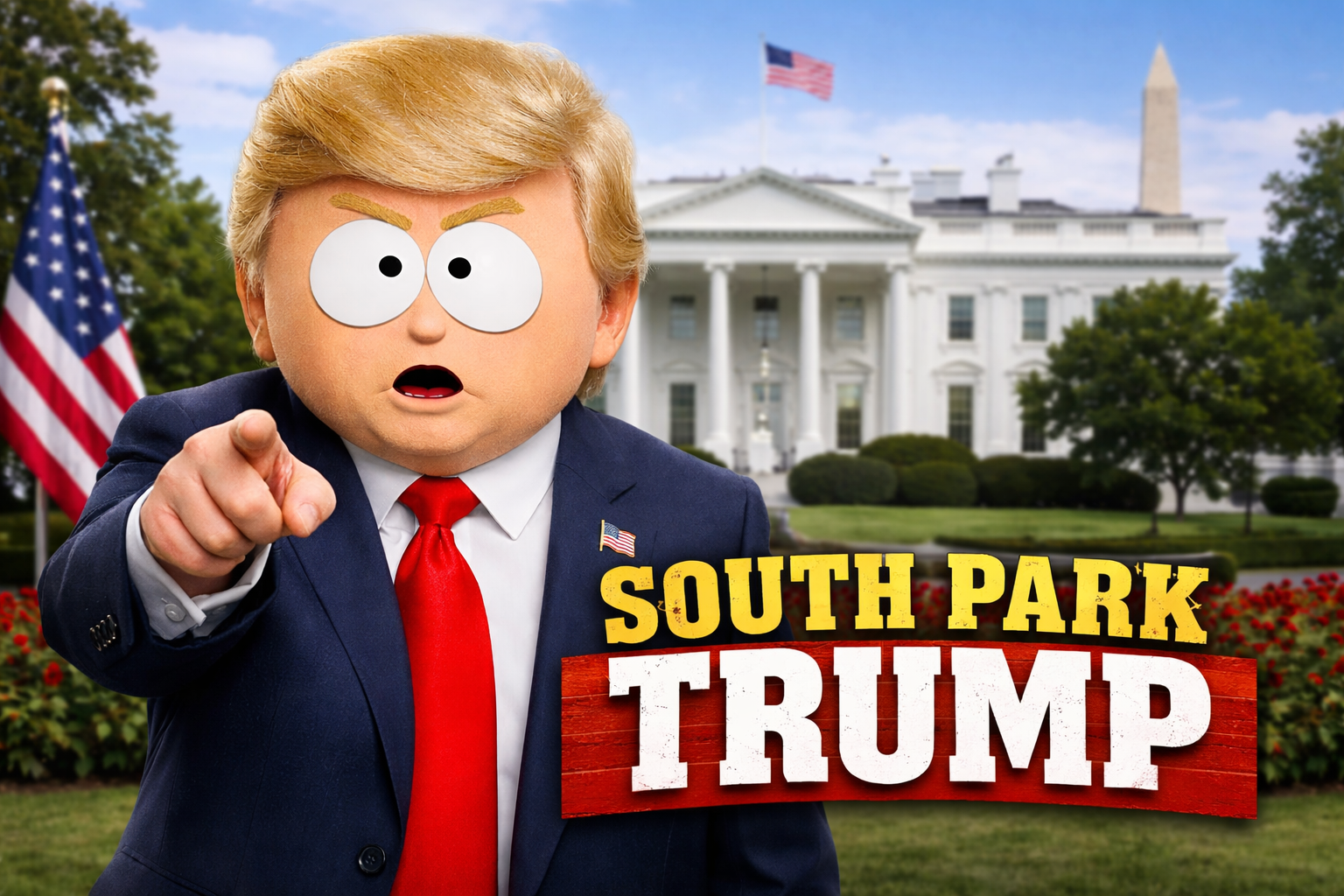
The phrase “South Park Trump” refers to how the animated series South Park portrayed and satirized Donald Trump–like political figures, especially during the 2016–2020 political era. Although the show rarely used Trump’s exact name directly, it created exaggerated characters and storylines that clearly reflected his personality, behavior, and political influence.
Because South Park is known for fearless satire, its political episodes became some of the most discussed television moments of the decade. Viewers often search this topic to understand which episodes referenced Trump, what the satire meant, and how accurate or controversial the portrayal was.
This complete guide explains South Park’s Trump-related satire, key episodes, character parallels, themes, controversies, and long‑term cultural impact in a clear and neutral way.
What “South Park Trump” Actually Means
First, it is important to understand that South Park did not always depict Trump directly. Instead, the show used fictional characters to represent real political figures. This approach allowed the creators to exaggerate traits while keeping narrative freedom.
Most commonly, viewers associate Trump with:
- Mr. Garrison’s political transformation
- Aggressive campaign rhetoric parody
- Media spectacle satire
- Power and ego exaggeration
Therefore, when people search “South Park Trump,” they usually mean the Mr. Garrison president storyline and related political satire arcs.
Why South Park Chose Satire Instead of Direct Portrayal
South Park’s creators traditionally prefer symbolic satire rather than literal impersonation. Consequently, Trump was represented through Mr. Garrison because:
- The character already had extreme personality traits
- Writers could exaggerate without realism limits
- Political messaging stayed comedic, not biographical
- Storylines remained flexible after real‑world events
As a result, the satire felt sharper and more absurd than direct parody would allow.
The Mr. Garrison Transformation: The Core Trump Parallel
Before politics, Mr. Garrison was a controversial teacher character. However, during the 2016 election season, he evolved into a political candidate figure clearly mirroring Trump.
Key parallels included:
- Anti‑establishment rhetoric
- Shock‑based campaigning
- Provocative statements
- Media dominance through controversy
- Outsider political identity
Although exaggerated, the resemblance was intentional and widely recognized by audiences.
Major South Park Episodes Connected to Trump Satire
1. “Where My Country Gone?”
This episode introduced the political Garrison storyline. Here, immigration debates and nationalist messaging were heavily exaggerated. As a result, viewers immediately connected the narrative to real‑world political discourse.
2. “Oh, Jeez” Election Episode
This episode aired during the 2016 election results. Initially, writers expected a different outcome. However, after Trump’s real victory, the episode was rapidly rewritten to reflect shock and media confusion. Consequently, it became one of South Park’s most famous political moments.
3. Season 20 Election Arc
Throughout this season, the show followed the campaign narrative. Moreover, it explored voter psychology, fear‑based messaging, and identity politics through satire. Therefore, Trump‑like themes remained central across multiple episodes.
4. President Garrison Era Episodes
After the election storyline, Garrison became president. Subsequently, the show shifted toward broader commentary on power, leadership perception, and political division. These episodes reflected ongoing Trump presidency debates.
How Accurate Was South Park’s Trump Satire?
South Park’s approach was not documentary accuracy. Instead, it used exaggeration to highlight perceived traits. Nevertheless, several elements mirrored real public perception at the time.
Perceived parallels included:
- Media attention dominance
- Polarizing communication style
- Anti‑elite messaging
- Loyal supporter base depiction
- Controversy‑driven publicity
Therefore, while fictional, the satire resonated strongly with viewers familiar with political events.
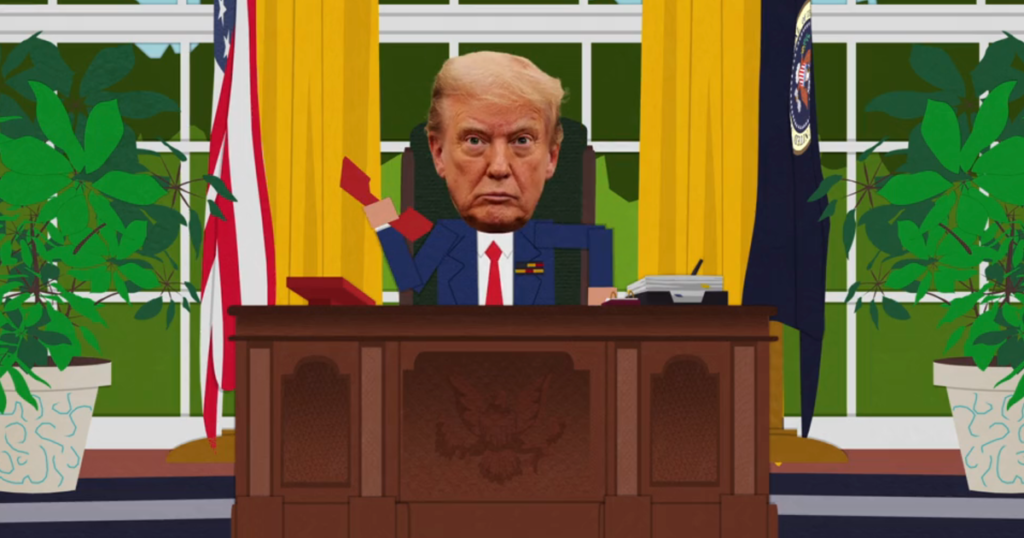
Themes Behind the Trump Satire in South Park
1. Populism and Outsider Politics
The show emphasized how outsider candidates gain traction through dissatisfaction narratives. Consequently, Garrison’s campaign reflected frustration with political systems.
2. Media Amplification
South Park repeatedly showed how outrage increases visibility. Similarly, real‑world political coverage often amplified controversy. Thus, satire targeted both politics and media dynamics.
3. Voter Psychology
Episodes explored why voters support polarizing leaders. For example, fear, identity, and anger appeared as recurring motivations. Therefore, satire examined public behavior, not only leadership.
4. Power Transformation
Once elected, Garrison’s character changed again. As a result, the show questioned how power alters identity and decision‑making. This theme extended beyond Trump to political leadership in general.
Why South Park’s Trump Storyline Was Controversial
Political satire often divides audiences. Accordingly, reactions to South Park’s Trump portrayal varied widely.
Supporters argued:
- It exposed political absurdity
- It challenged authority through humor
- It reflected real public sentiment
Critics argued:
- It oversimplified politics
- It intensified division
- It normalized extreme rhetoric through comedy
Therefore, the storyline became one of the show’s most debated arcs.
Cultural Impact of South Park’s Trump Satire
South Park has long influenced political comedy. However, the Trump era amplified its relevance.
Cultural effects included:
- Increased political discussion in animation
- Viral political clips online
- Satire entering mainstream news debates
- Younger audiences engaging with politics
Consequently, the show reinforced animation as a serious commentary medium.
Did South Park Support or Criticize Trump?
Importantly, South Park typically satirizes all sides. Thus, its Trump‑related episodes also mocked media, voters, and opponents.
For example:
- Liberal panic narratives were exaggerated
- Media sensationalism was criticized
- Political correctness culture was mocked
Therefore, the satire targeted the entire political ecosystem rather than one individual alone.
How the Trump Era Changed South Park’s Writing
Before 2016, episodes were mostly standalone. However, the Trump period introduced serialized storytelling. Consequently, entire seasons followed ongoing political arcs.
This shift happened because:
- Real‑world events evolved quickly
- Audience interest in politics increased
- Satire required continuity
As a result, South Park temporarily became more narrative‑driven than episodic.
Viewer Reactions and Audience Interpretation
Different audiences interpreted the satire differently. Notably:
- Some viewers saw criticism of Trump
- Others saw criticism of opponents
- Many saw both sides mocked
Because satire depends on interpretation, reactions reflected existing political beliefs. Therefore, the same episode produced opposite conclusions.
Comparison With Other Political Satire Shows
Compared with late‑night comedy shows, South Park’s approach differed significantly.
Late‑night satire:
- Direct impersonation
- Topical jokes
- Real politician references
South Park satire:
- Fictionalized characters
- Absurd exaggeration
- Narrative storytelling
Consequently, South Park created longer‑lasting political commentary rather than daily humor.
Long‑Term Legacy of the Trump Storyline
Even after political shifts, the Trump‑like arc remains influential in the show’s history.
Its legacy includes:
- Defining 2010s political satire in animation
- Expanding serialized storytelling in the series
- Demonstrating satire’s cultural influence
- Cementing Mr. Garrison’s evolution arc
Therefore, “South Park Trump” remains a major reference point for political comedy analysis.
Why People Still Search “South Park Trump” Today
Search interest continues for several reasons.
First, new viewers discover the show through streaming platforms. Consequently, they encounter political seasons later and seek explanation.
Second, political satire remains relevant across elections and leadership changes. Therefore, audiences revisit past portrayals.
Third, online discussions and clips frequently resurface. As a result, curiosity about context increases.
Frequently Asked Questions
Did South Park directly portray Trump?
Not consistently. Instead, Mr. Garrison represented Trump‑like traits and presidency themes.
Which season focuses most on Trump satire?
Season 20 and subsequent presidency episodes contain the strongest parallels.
Was the portrayal supportive or critical?
Both. The show satirized leadership, media, and voters simultaneously.
Why didn’t South Park use Trump’s real name?
Fictionalization allowed greater exaggeration and narrative freedom.
Final Thoughts
The “South Park Trump” storyline represents one of modern television’s most notable political satire arcs. Through exaggerated characters, serialized storytelling, and cultural commentary, the show explored leadership, media, and voter behavior during a turbulent political era.
Ultimately, South Park did not aim to document politics. Instead, it magnified absurdities to provoke reflection and debate. Consequently, its Trump‑related episodes remain widely discussed in both entertainment and political analysis.
For viewers, understanding this satire adds deeper context to the series and to the relationship between comedy and politics in modern media.