





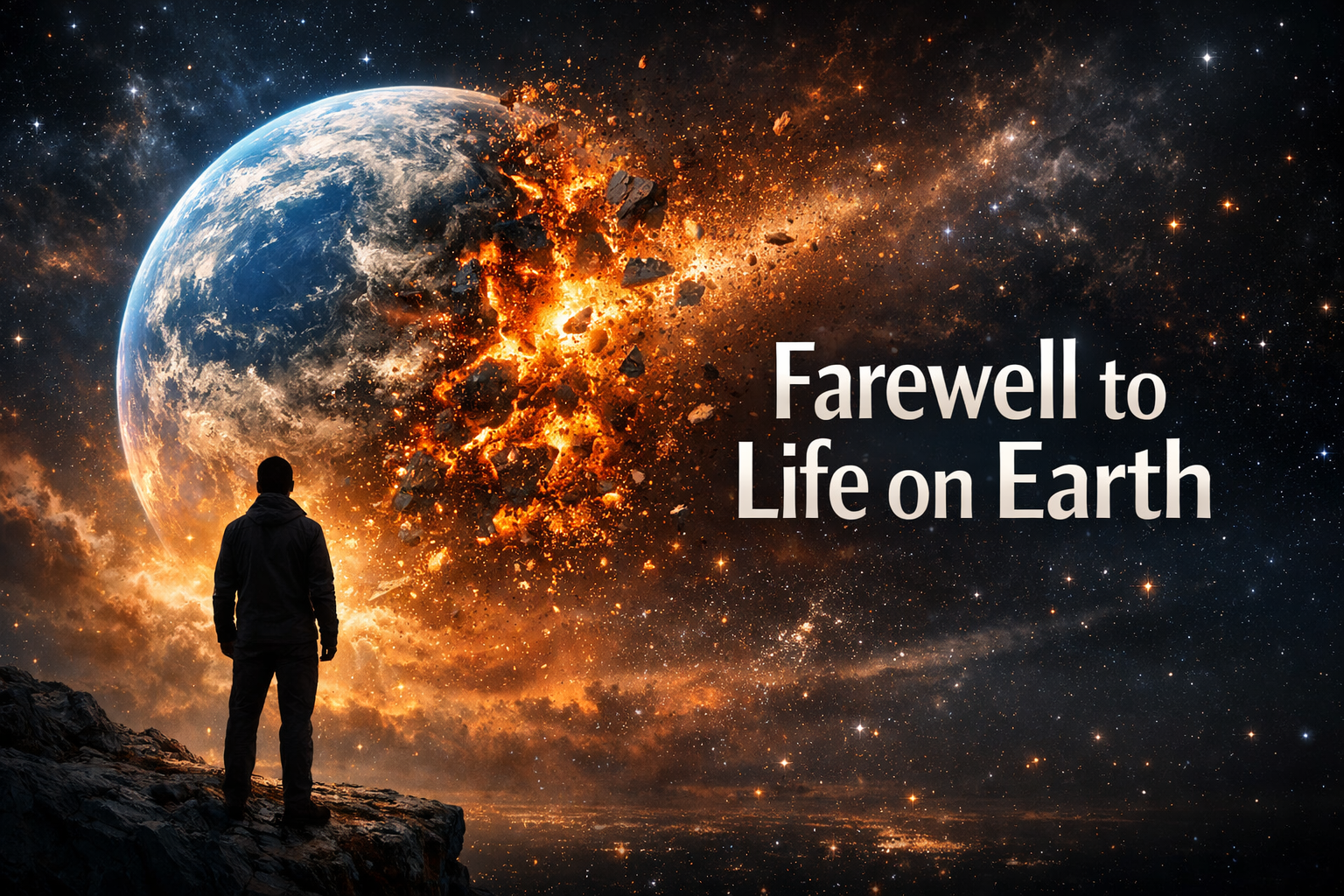
For most of human history, Earth has been our only home. Every civilization, culture, memory, and achievement has unfolded on this single planet. However, modern science and global risks have introduced a profound question: could humanity one day say farewell to life on Earth?
At first glance, the idea sounds like science fiction. Yet, growing discussions about climate collapse, planetary risks, and space colonization have made this concept increasingly realistic. Consequently, the phrase “Farewell to Life on Earth” now represents both fear and possibility — the fear of extinction and the possibility of expansion beyond our planet.
This article explores what a true farewell to Earth might mean, why scientists consider it, and how humanity could face such a future.
What Does “Farewell to Life on Earth” Really Mean?
The phrase does not always imply immediate extinction. Instead, it can describe several possible futures for humanity.
First, it may refer to the permanent end of life on Earth due to global catastrophe. In this scenario, environmental collapse, asteroid impact, or cosmic events render the planet uninhabitable.
Second, it can describe humanity voluntarily leaving Earth to live on other worlds. In this case, Earth remains but humans migrate elsewhere for survival or expansion.
Finally, the phrase may express a philosophical reflection: the idea that human civilization is temporary and will eventually disappear.
Therefore, “farewell” can mean destruction, departure, or transformation.
Why Scientists Discuss Leaving Earth
Although Earth currently supports life, it is not permanently safe. Multiple long-term risks threaten planetary stability. As a result, researchers increasingly study off-world survival strategies.
Planetary Fragility
Earth appears stable on human timescales. However, geological and cosmic timelines reveal constant change. Continents shift, climates fluctuate, and species disappear. In fact, 99% of all species that ever lived are already extinct.
Therefore, humanity is not guaranteed permanence.
Existential Risks
Several threats could eventually make Earth uninhabitable:
- runaway climate change
- nuclear war
- asteroid impacts
- supervolcano eruptions
- ecological collapse
- artificial intelligence risks
Individually, each risk is low probability. Collectively, however, long-term probability rises.
Consequently, scientists consider space colonization a backup for civilization.
Climate Change and the Fear of Planetary Loss
Among modern threats, climate change dominates public concern. Unlike sudden catastrophes, climate disruption unfolds gradually. Nevertheless, its long-term effects could be profound.
Rising temperatures alter ecosystems. Meanwhile, sea levels threaten coastal cities. Extreme weather damages agriculture. Over time, these stresses can destabilize societies.
Importantly, climate change alone is unlikely to eliminate all life. However, it could reduce habitability for billions of people. Therefore, the phrase “farewell to life on Earth” often reflects fear of environmental collapse rather than literal planetary death.
Could Humans Actually Leave Earth?
Technologically, leaving Earth is extremely difficult. Even today, space travel remains expensive, slow, and risky. However, progress continues.
Mars as a Potential Second Home
Mars receives the most attention for colonization. Although harsh, it shares some similarities with Earth:
- day length close to Earth’s
- polar ice caps
- past evidence of water
- manageable gravity
Nevertheless, Mars remains hostile. Temperatures are freezing, radiation is intense, and breathable air is absent. Therefore, long-term settlement requires massive infrastructure.
Space Habitats
Instead of planets, some scientists propose artificial habitats in space. These structures could simulate Earth-like conditions using technology. Consequently, humans might live in orbiting colonies rather than on planetary surfaces.
Such habitats avoid planetary gravity limits. However, they require advanced engineering far beyond current capability.
The Psychological Meaning of Leaving Earth
Beyond science, the idea carries deep emotional weight. Earth is not merely a location; it is identity.
Human culture, history, and meaning evolved here. Languages, religions, and traditions all originate from this environment. Therefore, leaving Earth would reshape human psychology.
People might experience:
- loss of planetary belonging
- nostalgia for natural landscapes
- cultural fragmentation
- identity transformation
Thus, a farewell to Earth would not only be physical but existential.
Is Extinction Inevitable?
All species eventually disappear. Fossil records confirm this pattern. Therefore, humanity is unlikely to exist forever in its current form.
However, extinction does not necessarily mean total disappearance. Humanity may transform through evolution, technology, or migration.
Possible futures include:
- biological extinction
- technological transformation
- interplanetary civilization
- digital consciousness
Consequently, “farewell to life on Earth” may describe evolution rather than death.
Space Colonization: Survival or Expansion?
Motivations for leaving Earth vary.
Survival Strategy
Some scientists argue humanity must spread across planets to survive cosmic risks. If civilization exists on multiple worlds, extinction probability drops dramatically.
This concept resembles biodiversity in ecosystems. Multiple habitats increase survival chances.
Expansion Instinct
Others view space colonization as natural exploration. Humans historically migrated across continents. Therefore, planetary expansion may continue this pattern.
In this perspective, leaving Earth is not escape but growth.
Ethical Questions About Leaving Earth
The concept also raises moral dilemmas.
Who Gets to Leave?
Space travel is expensive. Initially, only wealthy nations or individuals could migrate. Consequently, planetary departure may create inequality between those who leave and those who remain.
Responsibility to Earth
If humanity abandons Earth, ethical questions arise. Do humans owe restoration to their home planet? Or is survival priority?
Preservation of Life
Another concern involves transporting Earth life elsewhere. Introducing terrestrial organisms could contaminate alien ecosystems. Therefore, colonization risks cosmic ecological disruption.
Could Earth Ever Become Uninhabitable?
Complete planetary death is unlikely in near future. However, long-term cosmic processes will eventually end Earth’s habitability.
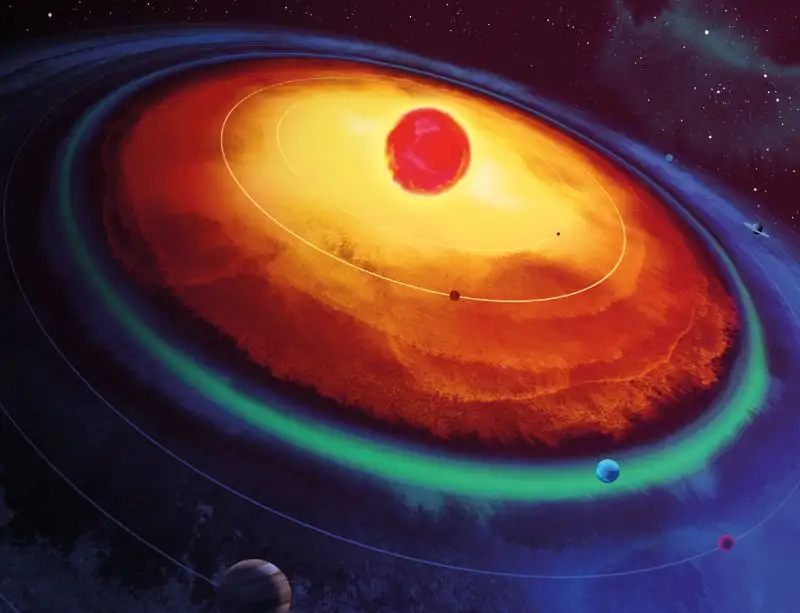
In roughly one billion years, solar brightness will increase enough to evaporate oceans. Eventually, the Sun will expand into a red giant. At that stage, Earth’s surface will melt.
Thus, planetary farewell is inevitable — but extremely distant.
Cultural Visions of Earth’s End
Human imagination has long explored planetary endings.
Stories describe:
- apocalyptic destruction
- cosmic evacuation
- artificial worlds
- digital afterlives
These narratives reveal collective anxiety about mortality. Because humans understand death individually, they also imagine planetary death collectively.
Therefore, “farewell to life on Earth” resonates psychologically.
The Role of Technology in Humanity’s Future
Technology determines whether departure becomes possible.
Key developments include:
- reusable rockets
- closed-loop life support
- radiation shielding
- artificial gravity systems
- planetary engineering
As these technologies advance, off-world life becomes more plausible.
However, technological capability does not guarantee migration. Social, economic, and ethical factors also matter.
Would Humans Still Be Human Away From Earth?
If humanity lives elsewhere, identity may change.
Different gravity alters physiology. Radiation exposure affects genetics. Isolation shapes psychology. Over generations, evolution could diverge populations.
Eventually, space-born humans might differ significantly from Earth-born ancestors. Thus, leaving Earth could create new branches of humanity.
Earth as a Unique Planet
Despite risks, Earth remains extraordinarily rare.
It provides:
- liquid water
- breathable atmosphere
- protective magnetosphere
- stable climate range
- complex ecosystems
No known planet matches these conditions. Consequently, Earth remains humanity’s most valuable habitat.
Therefore, preservation remains essential regardless of future expansion.
Could Digital Existence Replace Physical Life?
Some futurists propose non-biological survival. Consciousness could theoretically be uploaded into digital systems. In this scenario, humans no longer require planets.
Digital existence would eliminate environmental dependence. However, philosophical questions arise about identity and consciousness authenticity.
If such transformation occurs, “life on Earth” would end without extinction — humanity would change form.
The Most Realistic Future: Staying and Expanding
Experts generally agree on a balanced outcome. Humanity will likely remain on Earth while gradually expanding outward.
Earth would remain cultural center. Meanwhile, small off-world settlements develop. Over centuries, expansion may grow.
Thus, farewell becomes unlikely in near term. Instead, humanity may become multi-planetary.
Why the Idea Matters Today
Even if departure is distant, the concept influences present decisions.
First, it highlights planetary fragility. Recognizing Earth’s uniqueness encourages environmental protection.
Second, it expands perspective. Humanity becomes a cosmic species rather than purely terrestrial.
Third, it inspires technological innovation. Space exploration drives scientific progress.
Therefore, contemplating farewell strengthens planetary responsibility.
Philosophical Reflection: Humanity’s Place in the Universe
Ultimately, the phrase raises existential questions.
Are humans temporary accidents?
Is intelligence meant to spread beyond origin?
Does survival justify planetary transformation?
These questions lack simple answers. However, they shape civilization’s long-term direction.
Could Humanity Ever Truly Say Goodbye?
Even if humans migrate, Earth would remain birthplace. Cultural memory would persist. Historical identity would anchor here.
Therefore, farewell might never be complete. Earth would remain symbolic home regardless of physical absence.
Just as people remember ancestral lands, humanity would remember Earth.
The Future of Life Beyond Earth
Scientific progress suggests several stages:
- robotic exploration
- temporary human missions
- research bases
- small settlements
- independent colonies
Currently, humanity stands between stages two and three. Consequently, planetary departure remains theoretical but plausible.
Protecting Earth While Exploring Space
Importantly, leaving Earth should not replace preservation. Both goals can coexist.
Environmental protection ensures planetary stability. Meanwhile, space exploration expands survival potential.
Thus, humanity’s future likely involves dual commitment: safeguard Earth and explore cosmos.
Final Thoughts: A Possible but Distant Farewell
The idea of humanity leaving Earth evokes awe and uncertainty. While extinction or migration remain distant possibilities, contemplating them reshapes perspective.
Earth is fragile yet resilient. Humanity is temporary yet adaptable. Therefore, the future may include both preservation and expansion.
Rather than fearing farewell, humanity can view it as long-term evolution. Our species began on one world. Eventually, it may live on many.
For now, however, Earth remains home — the only known cradle of human life in the universe.
FAQs
What does “Farewell to Life on Earth” mean?
It refers to humanity leaving Earth permanently or the end of life on the planet due to catastrophe or cosmic change.
Is humanity likely to leave Earth?
In near future, no. However, long-term space colonization remains scientifically plausible.
Could Earth become uninhabitable?
Eventually yes, but not for hundreds of millions of years. Current risks are environmental and technological rather than cosmic.
Why do scientists consider multi-planetary life?
Spreading across planets reduces extinction risk and ensures long-term survival of civilization.
Will humans always live on Earth?
Most likely yes. Even with space expansion, Earth would remain primary human habitat for very long time.